HomeReviewsGamedec
Jargon overload
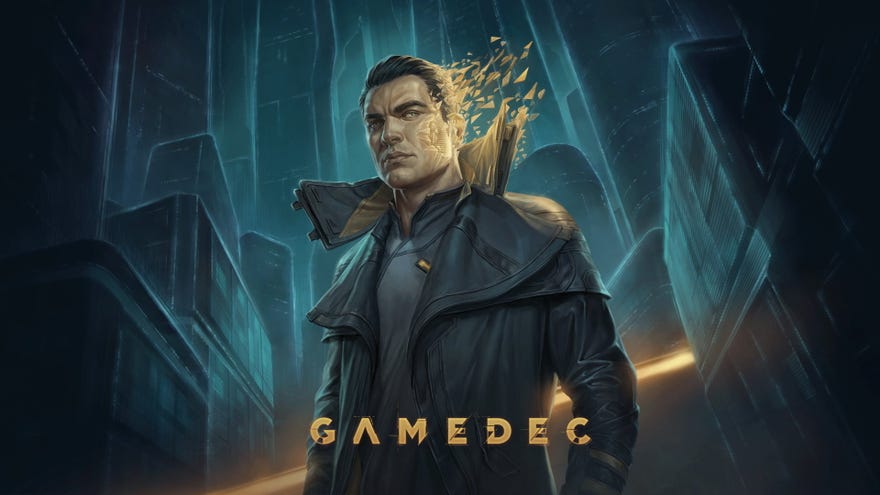
From the stealth-orientedForeclosedto the twin-stickyThe Ascent, there has been a bumper crop of cyberpunk shooters this year, their endless gun fests typically set amidst a gaudy onslaught of neon-tinged billboards, metallic skyscrapers and indiscriminately-placed Asian motifs.
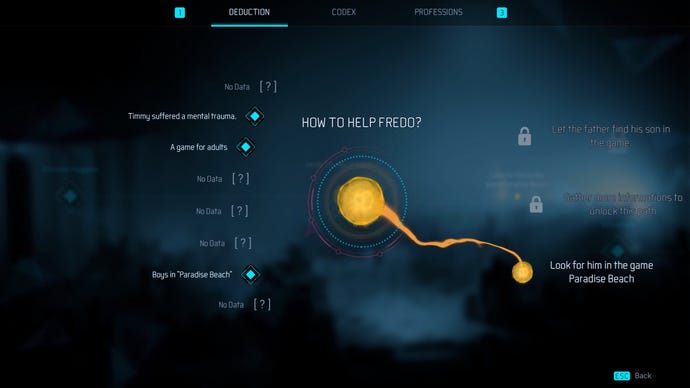
In spite of its roots,Gamedecinitially seems like a reprieve from this recent blitz of cyberpunk games. It sticks steadfastly to its self-imposed, zero-combat rule, instead leaning heavily towards the genre’s crime fiction elements. That’s because in Gamedec, you’re a detective actually carrying out proper investigative work, rather than simply pointing the smokey end of a gun towards your problems. You’ll sleuth around for clues, make deductions based on your discoveries, and draw conclusions that will shape the outcome of your cases.
Gamedec - Narrative Branching TrailerWatch on YouTube
Gamedec - Narrative Branching Trailer

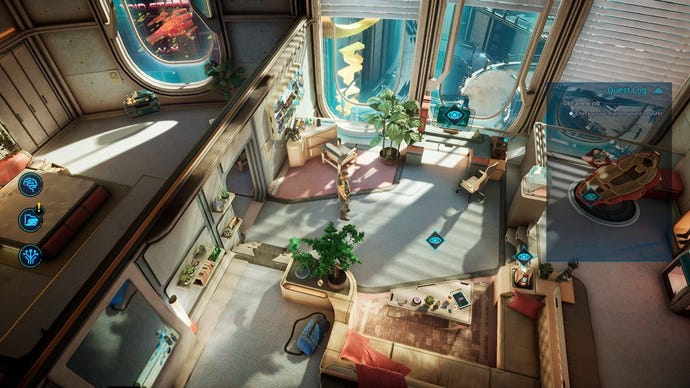
Rather than the trite, glitzy aesthetics and empty spectacle of modern cyberpunk, Gamedec’s universe feels like a fresh spin on a nearly threadbare genre that’s gradually being drained of its novelties. The neon signs are still there in Gamedec, but you’ll spend plenty of hours indoors taking shelter from the perpetual acid rain, or in digital realms that are a far cry from Gamedec’s reality — like the sunny, pastoral town of Harvest Time, a farming game wrapped in the veneer of the Wild West.
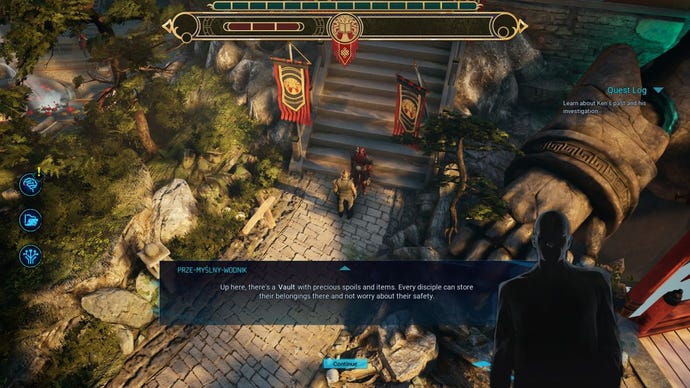
In fact, these virtual worlds are clearly the game’s beating heart. They’re idiosyncratic, self-contained realms bursting with personality and self-referential humour. Take, for instance, the aforementioned Harvest Time. You’ll head here while pursuing a lead, and one of your tasks is to experience the mind-numbing repetition of virtual farm work, watching pumpkins grow and collect the shiny little trinkets that pop up magically with a satisfying chime, all as a cowgirl yells “yeehaws” of encouragement at you. In contrast are the sleazy back alleys of Twisted & Perverted, a depraved, adult-oriented virtual world that explicitly encourages its players to engage in wanton sex and murder for rewards and access to exclusive content. This results in you stabbing a companion, repeatedly, in front of a cinema to gain access to its cordoned-off rooms — a hilarious gimmick that’s as ludicrous as much as it’s a searing indictment of the pointlessness of the grind.
Since solving these cases largely hinges on making accurate observations and deductions, it’s frustrating that my review build’s English translation of its original Polish dialogue was incomplete - particularly in the game’s hefty codex entries (although the developers have assured me that the game will feature full translations at launch). This may seem like a bit of a nitpick, since codex entries are usually perfunctory bits reserved for lore-obsessed roleplaying enthusiasts, but it turns out that these texts are absolutely crucial to making sense of Gamedec’s myriad realities.
Conversations are frequently littered with a library of confounding terminologies, too. We have ”enpec”, “diginet”, “ilgens”, “mobriums”, “genskins”, “devitalization”, “walktels”, infolia”, “virtualium”, just to name a few. Characters you meet will also spew incomprehensible lines like, “Karen was just devitalized and was last seen with an expensive genskin, but her walktels are nowhere to be found. Turns out she’s also an enpec with a ilgen.” My first instinct, of course, is to reach for the codex as some sort of bilingual dictionary when this happens, and it seems that this move is implicitly encouraged too, given that the codex is prominently featured between the “deduction” and “professions” button on the left-hand side of the screen.
Just as tedious was that pronouns were translated wrongly or poorly throughout (and for the record, Gamedec only uses binary “he/she” pronouns, at least during its character creation, which is its own obvious issue), with some people being referred to via a combination of “he”, “she” and “they” pronouns. These oddities may also stem from the Polish language, which employs grammatical genders that include masculine, feminine and neutral forms, but this was another source of significant confusion - especially when a few clues point towards individuals of a specific gender. In short, I had to spend a few hours reloading previous saves to finish this review.
The most glaring problem with Gamedec, though, is something that a complete translation won’t fix: that its worlds are a dizzying whirlpool of incomprehensible vocabulary, and they feel increasingly overwrought the more its plot progresses. Gamedec insists on pumping more new, esoteric nouns in later chapters, which all eventually add up to an impregnable lexicon that becomes too bloated to properly digest. Making any headway into your investigations very quickly becomes the least of your considerations when you’re struggling to understand basic speech.
It’s a pity, because Gamedec has brilliant ideas for subverting the banal cyberpunk formula. It explores the concept of metaverses through an invigorating, dynamic collage of virtual worlds, without relying on the usual signifiers of cyberpunk that its peers have drawn on to evoke scenes of excessive consumerism and exoticism. It captures the uncertainty and frustration of investigative work, sometimes forcing you to make decisions based on gut instincts alone, particularly in situations where information is scarce or when you don’t have the luxury of resources and time to unspool every narrative thread. It celebrates rare moments of joy that arise from making the right deductions, or whenever you see these threads weaving into a meticulous web of schemes and political chicanery.
