HomeReviewsFinal Fantasy VII Remake
Final Fantasy VII Remake Intergrade review: a luscious spectacle that takes FF7 in a bold new directionSeventh Heaven
Seventh Heaven
Final Fantasy VII Remakecertainly knows how to make a good first impression. The original’s bombing mission sequence, which sees Cloud and co. blow up a planet-killing mako reactor in the industrialised hellhole of Midgar’s city centre, was already one of theFinal Fantasyseries' best openers, but here we get to really luxuriate in every last detail of its twenty-four-year glow-up. Director Tetsuya Nomura may have a reputation for excess in JRPG circles (both in his tangled storylines and his passion for buckles and belts), but in FF7R that tendency toward indulgence has been applied with deadly, laser-like precision.
FINAL FANTASY VII REMAKE INTERGRADE FOR PC – ANNOUNCE TRAILERWatch on YouTube
FINAL FANTASY VII REMAKE INTERGRADE FOR PC – ANNOUNCE TRAILER

And yet.
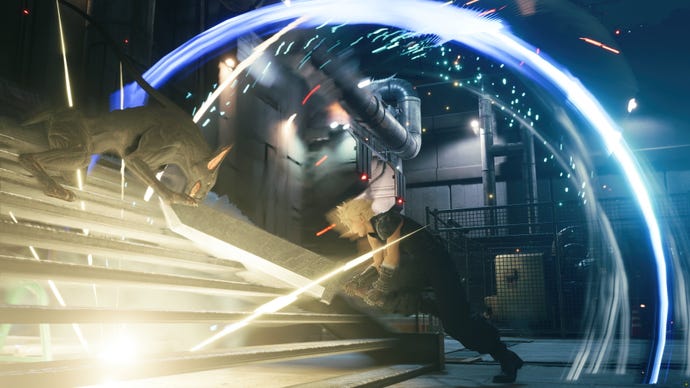
When you open up the Command Menu, time slows right down, giving you plenty of time to choose a special attack, issue commands to the rest of your party, or just assess your options.
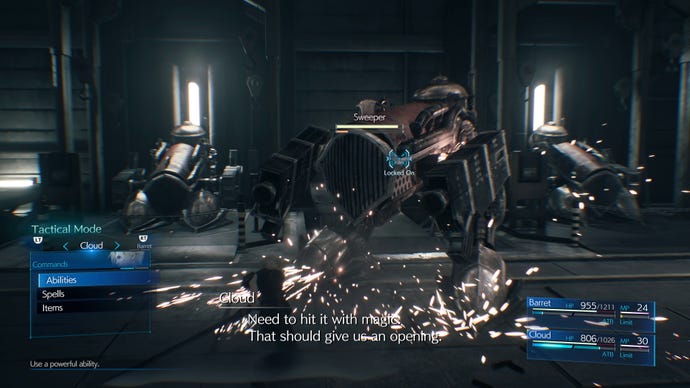
Happily, there’s a good chance one of your party members will be in better shape, and you can either issue them specific commands to help you out, or take control of them wholesale if you fancy switching things up. FF7R teaches you the virtue of bouncing between party members, as there are some enemies that Cloud and his over-sized sword just can’t reach. In these cases, Barret’s long-range arm cannon or Aerith’s magical spells make for much better options, and swapping between your different party members to exploit weaknesses, pressure and then eventually stagger enemies for mega hit points keeps even the smallest monster and Shinra grunt rumbles feeling fresh and invigorating.
It’s a gorgeous system in every sense of the word, rewarding considered decision-making with the series' flashiest attack animations to date. The latter may well be another nostalgia grab for returning fans, but it nevertheless builds and improves on XV’s pure action model in all the right ways. Noctis and his gaggle of guards never looked as cool or capable as Barret, Tifa, Cloud and Aerith (yes, even Aerith) do here, nor did they ever really sell the idea of a cohesive party working together. You were always just dogsbody Noctis, with the occasional quip from Ignis thrown into the mix, the odd greatsword slam from Gladio, and a reel of pictures from Prompto once it was all done and dusted. FF7R, on the other hand, recaptures the series' heart-pounding party management while also looking hot as hell in the process. Dazzling doesn’t do it justice.
Its flashy battle animations make for some great photo mode fodder, although the camera could be more flexible…
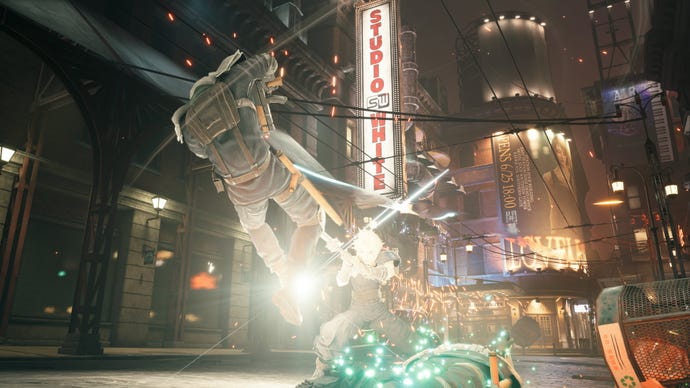
That’s not to say FF7R’s veneer is completely flawless, however. While this PC release is a marked improvement on the original PS4 version, I wouldn’t say it looks materially different from the enhanced PS5 version. I’ll wait for the inevitable Digital Foundry comparison video for the full breakdown of its technical achievements, but even I was disappointed to find just two graphics options in FF7R’s settings menu (shadow and texture resolution), both of which only let me toggle between High or Low. Both, I’m pleased to report, do at leastfix those godawful doors(as did the initial PS5 enhancement that arrived the same time as Intergrade did) but even 4K High settings on PC can’t save some of Midgar’s lesser details from falling into pixelated obscurity. As pleased as I am to finally see Remake on PC, this particular port also has me longing for a proper XV-style Windows Edition. We do, at least, benefit from superior frame rates compared to consoles, with 30fps, 60fps, 90fps and 120fps options available regardless of resolution, but that’s really the only tangible upgrade.
The all important door test:Textures and shadows on LowTextures and shadows on High
Textures and shadows on Low
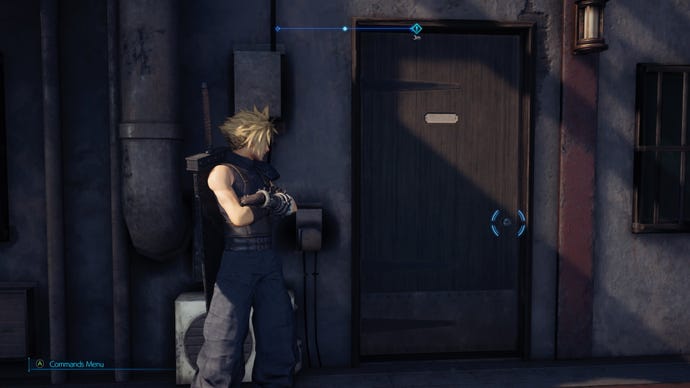
Textures and shadows on High
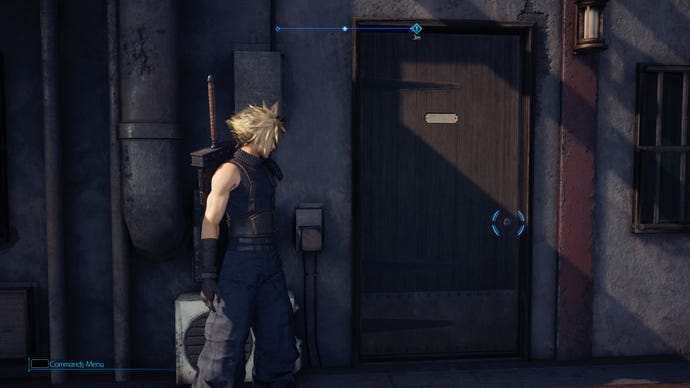
There’s also the age-old argument of whether it’s even worth buying into it in the first place (especially atthese exorbitant prices) given we still know next to nothing about what Square Enix are doing with Part II, or even whether they’ll ever finish it in a single human lifetime. I exaggerate, of course, but part of me does have doubts over whether we’ll see it conclude in the next decade. I also don’t even want to think about how much we’ll spend getting there either, especially when you can, in theory, see it all now via the original release onSteam for a tenner.
And yet.
When absurdly detailed character models meet… absurdlyundetailed world textures.
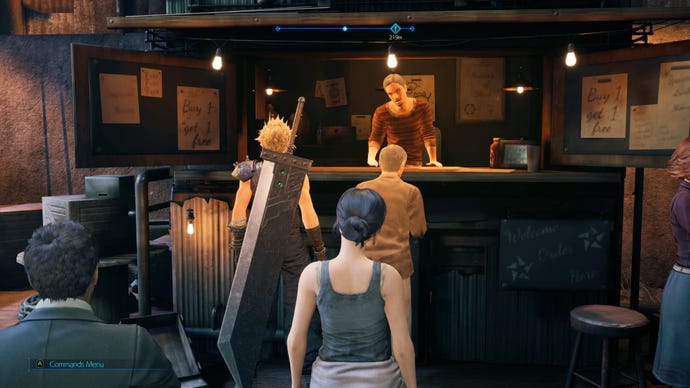
Final Fantasy VII Remake Intergrade doesn’t just make a good first impression. It also makes a lasting impression, which is something that’s been missing from mainline Final Fantasies in recent years. The bits in between could be more succinct, sure. Chapters could be less drawn out; there could be less cramming yourself through endless tight spaces to disguise its loading screens; heck, you’ve fixed the goddamn doors Square Enix, why couldn’t you have fixed the nice little paper signs on Ma’s Soft Drinks shop, too, eh? Despite all that, and the fact it’s probably twice as long as it should be, Final Fantasy VII Remake Intergrade nearly always has enough highs to balance out the lows. Its action barrels along with a joyous spring in its step, and even the cinematics leave you gasping for breath at the absurd spectacle of it all. Final Fantasy XV may proclaim itself to be “the Final Fantasy for fans and first-timers,” but I’d argue Final Fantasy VII Remake Intergrade is a much more fitting recipient of the title.
