HomeFeaturesExpeditions: Rome
Expeditions: Rome is a CRPG where you hang out with Cicero and lead an army as a side hustleWherever I may Rome.
Wherever I may Rome.
For a long time, I’ve had a low-key yearning for more CRPGs with a historical setting - to me, it feels like a gold mine that’s barely been scratched at. As such, imagine my delight in discovering not only that a hefty one is on the way later this year, but that it’s about the good old Romans besides.
Expeditions: Rome - Announcement TrailerWatch on YouTube
Expeditions: Rome - Announcement Trailer

E:R, very plainly, is a much more ambitious game than its predecessors. And while I clearly don’t know what it’ll play like on release, I know the difference between developers who are genuinely excited to show off their work, and those who have a professional responsibility to act like they are. This demo fell very much into the first column, and that’s always a good sign.
The North Africa maps, which I’ve seen most of, look absolutely gorgeous - the colours, in particular, made me very happy to look at.
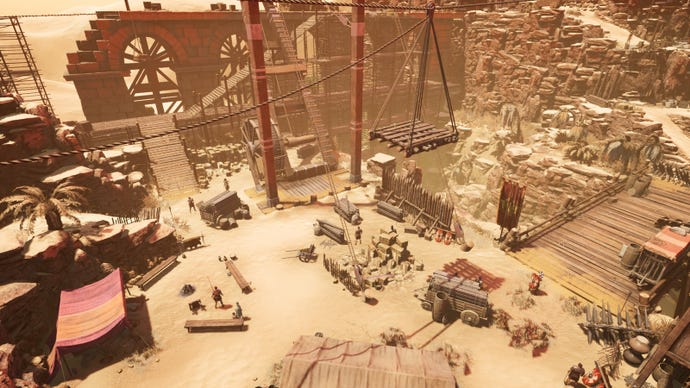
The story of this nightmarish lads’ adventure holiday takes you to North Africa, Greece and Gaul, before you make your way back to Rome for what I suspect will be an endgame reckoning. In the 40-plus hours it’ll take to play it through, your Legatus will be trying to get to the bottom of the skullduggery behind the game’s inciting incident. But crucially, they will also be responsible for the small, trifling task of leading a full Roman Legion on campaign.
This is your home from home: the legion’s encampment.
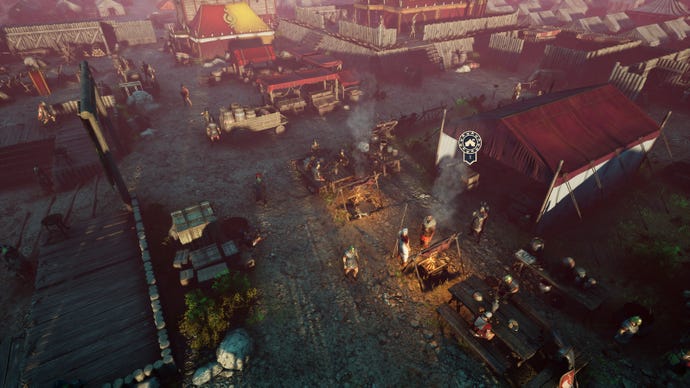
Obviously, this isn’t going to be a Total War game. You’ll want, well, Total War for that. But it seems that Logic Artists have really leaned in to the army management side of the game: your hub in each act of the game is a military camp which you’ll actively manage and upgrade, while also making decisions about where to send soldiers.
Some decisions will buff your party directly, while others will have wider consequences. For example, the strength, deployment, and actions of your troops in a region will change the interactions your character has with NPCs, in ways that aren’t hard to imagine.
And although you won’t be commanding sprawling field battles on screen, you will be able to take legionaries out with you with your party when you’re RPGing. They will serve as your Praetorian guard, and satisfyingly, they will essentially be redshirts. “They are fairly disposable,” explains creative director Jonas Weaver. “They do gain XP and level up, but if one of them dies, you can always recruit a new one. The starting level of your recruits depends on the upgrade level of your barracks, so as long as you keep your camp upgraded, your recruits will more or less keep up with your level.”
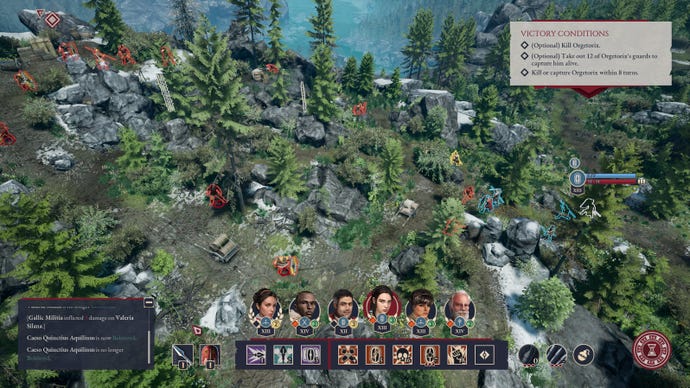
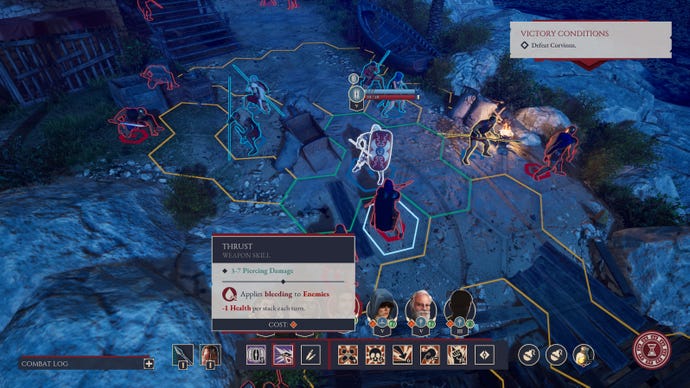
I’ve talked more about the narrative aspects of the game in this post, but here you can see some people trying to kill each other inside a series of eerie supernatural hexagons which have appeared on the ground.
Ave, citizen!Ghoastushere again! So, these fellows think they know Rome, eh? I decided I’d put that to the test, and asked this Jonas Weaver whether he’d included my favourite food, delicious fermented Garum, in the game. To which he said: “You know what? Somehow we have not managed to squeeze in anything about Garum. We do have a small selection of Roman drinks that you can brew up and imbibe to get combat buffs, however, such as the spiced vinegar drink Posca and the honeyed wine called Mulsum.” Hm. I suppose you’ll escape the spectral panthers this time, Weaver, but only since I do like a refreshingly ghastly glug of Posca.Image credit:A jaunty banner reading “Dicit Ghoastus:” (“Ghoastus says”)

It won’t just be rando brutuses joining you on your quests, of course. Characters you’ve encountered on quests, or enemies you’ve spared in combat, will sometimes show up in your barracks for recruitment too. And of course, if you make a pig’s ear of managing your military activities, your potential Praetorians (depending on their character traits) may mutiny and desert you.
Going back to historical characters, there are some that I’m really looking forward to interacting with. Weaver mentioned an encounter with Cato, Julius Caesar’s famous rival, who abruptly asks your character to justify an action they took much earlier than the game. “Cato isn’t as interested in what you did as he is in your reasons for doing it,” Weaver says. “If you can convince him that you are a moral and virtuous person, he will lend you his help later on.”
That’s Gaul, folks!