HomeFeaturesOuter Wilds
Echoes Of The Eye is sensational DLC for Outer Wilds - don’t let anyone spoil it for youGOTY 2019 is now GOTY 2021
GOTY 2019 is now GOTY 2021
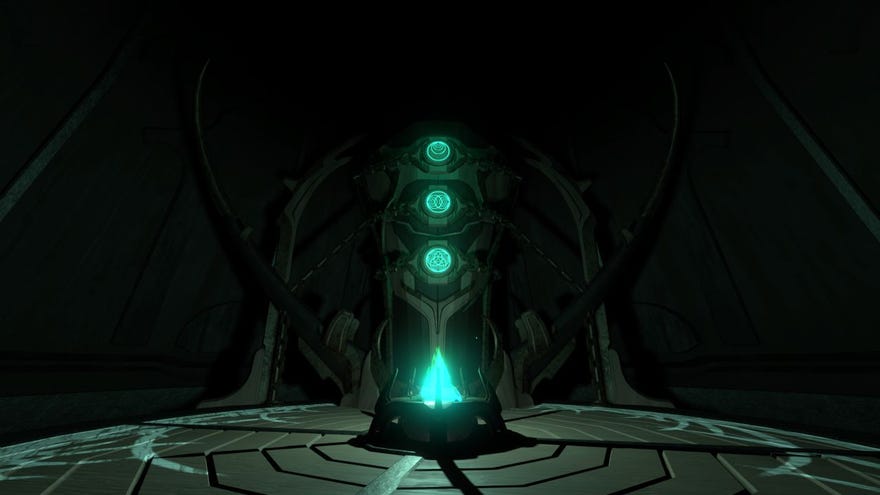
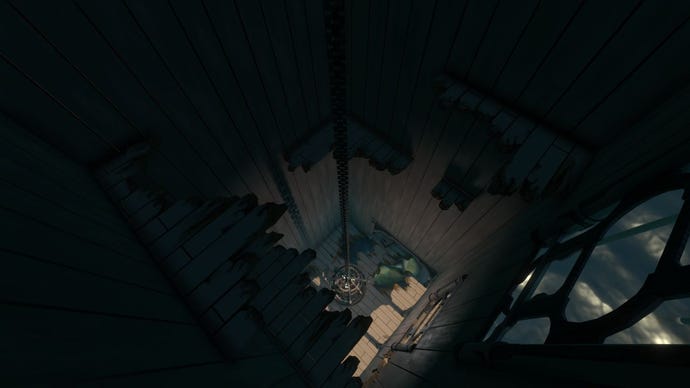
These had to be the screenshots used as just about everything else you point the camera at in Echoes of the Eye is a something. Andreallysomething. When I stepped into the location hosting the expansion I let out a tiny “oh my”, and felt the instant need to show it to someone else. But people who give in to that impulse are not your friend. In a game that has already given us planets crumbling into a black hole core and binary moons sucking the surface from one another, the new addition is somehow even more out there: I stared at it for a good few minutes before realising it wasn’t just some skybox designed to suggest scale, but a fully explorabl- no, I shouldn’t.
OUTER WILDS: ECHOES OF THE EYE | Reveal TrailerWatch on YouTube
OUTER WILDS: ECHOES OF THE EYE | Reveal Trailer

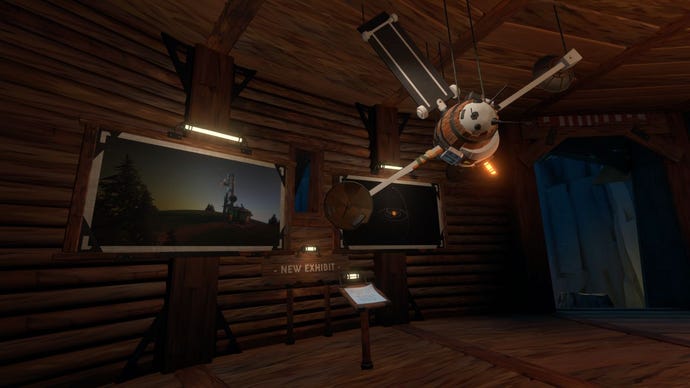
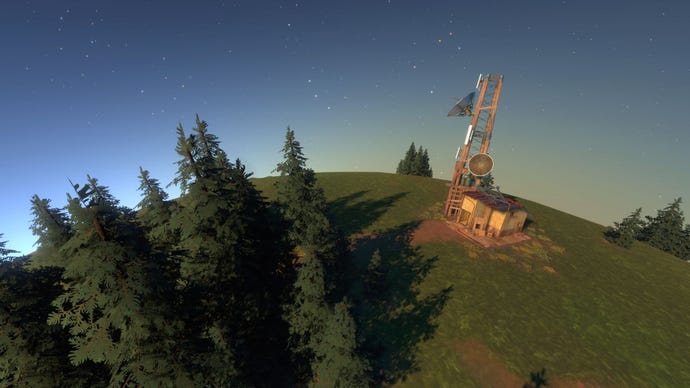
Only… you can. Sort of. Where I had expected Echoes Of The Eye to lean into the main game’s Quantum Moon oddness to justify a trip to parts unknown, the actual solution is far more elegant. You wake, as usual, at the fire back at home, and are pointed to a new exhibition at the observatory: the hand holding ends there. In the brief period it took my brain to reacclimatise to Outer Wilds’ specific adventuring vibe I panicked I might not be able tofindthe expansion - but the clues are there and the hands-off approach allows that new area to emerge in a suitably theatrical way. But it’s wisely self-contained enough to coexist with the main game.
So to the location itself: it’s a substantial structure to explore, built around a mode of transport that, like everything in Outer Wilds, has a boisterous physicality that makes it as much a toy as a puzzle solution. In this regard it has a lot in common withSea Of Thieves, another game built around accessible but flexible instruments that rely on an innate understanding leftover from childhood make believe. This isn’t the terrifying space travel of Gravity or Interstellar, but more like an episode where Mr Benn goes to the moon. The DLC is Outer Wilds at its most wide-eyed and adventurous.
While it’s tucked away from the solar system, the new world is still beholden to the same time loop and, like the other planets, there’s a significant state change that dramatically impacts what can be done and when. I’m sorry to be so coy, but this really is the most spectacular part of the package, a recreation of a disaster that I’ve seen in other games, but only ever in highly scripted set pieces. Okay, this is scripted in that it always triggers at moment X, but the event itself is wild and unleashed and simulated in a way that you really get to live it. Honestly, it’s a hell of a way to die.
And so you slip into the rhythm of Outer Wilds proper. You use your 20 minutes to poke and probe and outrun the chaos that prevents later poking and probing, all the while filling your ship’s computer with leads for future detective work. What’s neat about the new setting is how it feels like the solar system in miniature, rather than just a single planet. There’s a handful of key sites to explore in the structure, with their own mysteries and story, but also a complex relationship between them that captures the more galaxy-scale cleverness of the main quest.
If there’s a theme to it - in the way that Dark Bramble is about creeping dread, or Brittle Hollow is a race against collapse - it’s one of shifting perspective. Light and dark fuels some stonking new puzzles - squeezing even more functions out of your flashlight and scope launcher - and takes a key role in a society that documents its history in slide projections. I loved the sense of character that bubbled through the Nomai’s living graffiti in the rest of Outer Wilds, and this just as effectively conveys another civilization with drama and trauma to slowly unpick.
But the sense of shifting perspective runs deep in Echoes of the Eye’s bones. The expansion proves a lot more substantial than you first expect, peeling like an onion to reveal new layers to your surroundings, in turn revealing hidden layers to those. The way much of this is hidden in plain sight, to be revealed with knowledge rather than tools, taps into something specific to videogames. It’s the nerdy satisfaction of learning the rules governing Bubble Bobble item spawning, or the rush from hearing aboutSpelunky’s latest hidden cranny, only designed for you to discover it and feel like Neo finally looking through the Matrix. It’s phenomenally well done.