HomeReviewsDorfromantik
Dorfromantik review: the best strategy puzzler two years in a rowOut on the tiles
Out on the tiles
Until last year, the idea of having a ‘forever game’ never really clicked with me. I’m too old and thin-skinned to enjoy the competitive nature of most online FPS games, and rallying together a regular squad of buddies to tackle the world of games as a service always seemed too much like hard work. Heck, even the allure of daily challenges in some of my favourite single-player games has never quite hooked me in the same way I’ve seen them take hold in friends and family. But withDorfromantik, the chill, pastoral village builder from Toukana Interactive, I finally understand the journey towards that mythic ‘forever’ status.
Ever since itlaunched into early accessin March last year, Dorfromantik has been a constant source of nourishment in my gaming diet. I’ve played it in quick bursts when I’ve had a spare 20 minutes to fill, I’ve played it for hours on weekend mornings while I sip my first mug of tea, and I’ve played it for several more during the evenings as a way of unwinding after work - and that’s just its original Classic mode. As it leaves early access today and enters its full 1.0 release, it now comes armed with almost half a dozen more, as well as a bevy of small but important quality of life improvements. Together, they help to elevate its simple concept of rotating and putting down tiles into an elegant work of art.
What actually is Dorfromantik? - Full Release Version 1.0 TrailerWatch on YouTube
What actually is Dorfromantik? - Full Release Version 1.0 Trailer

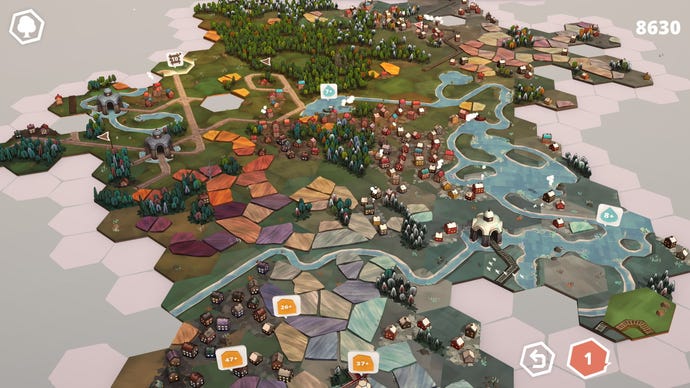
In the beginning I played to make pretty landscapes. Now I play for points (see above for my best score to date), but the latter is no less enjoyable for it.
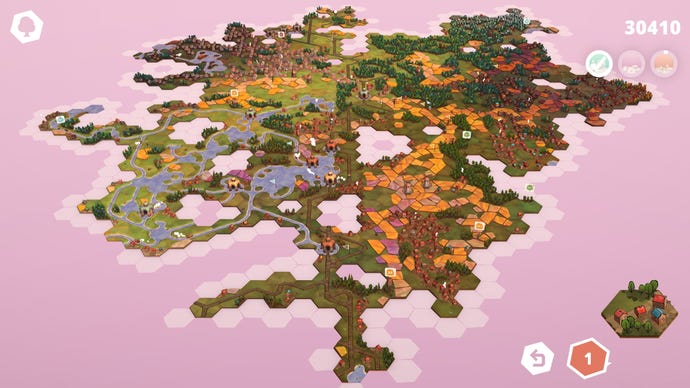
Indeed, your only real concern is that all important point score. That, and maybe following the ghostly silhouettes that rise up from the void every now and again to draw you out into the deeper recesses of its endless map. These gentle directional nudges not only help provide the game with a strong, structural backbone, but they also feed back into its core reward loop. Get there and complete the attached sidequest, for example, and you’ll have earned yourself a new tile to play with at the end of it. Some give you interesting side combos while others are purely cosmetic, but the latter still help serve a purpose. Sure, they might perform the same function as their plainer siblings, but river tiles that now have water wheels on them or trees with ruins that thread between its branches all contribute to game’s rich visual tapestry. It’s what makes noodling about in these spaces so enjoyable.
Biomes will morph and change seasons across the map as it grows in size, with new tiles automatically adopting new colours depending on where you place it. It’s small touches like these that make experimenting in Dorfromantik so delightful.
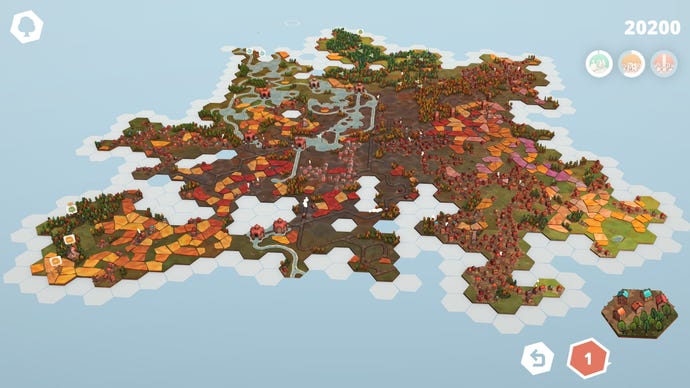
Sure, those dopamine hits get thinner and more diluted the longer you play - I haven’t had one of these in quite some time now I’m approaching the 80-hour mark - but that’s where Dorf’s actual ‘Rewards’ system comes in. This achievement-like list of tasks is always ticking up in the background in Dorfromantik, regardless of which three it chooses to highlight on the main UI. Again, nothing happens if you don’t complete them. They’re more suggestions than anything else. But the simple fact they exist is why precisely why I’ve spent almost 80 hours playing Dorfromantik, say, and not even eight minutes playing the equally delightful, but ultimately quite throwawayTownscaper.
That’s not to say you can’t just play it to make lovely little landscapes, though. That’sexactly how I played itto start off with, before Toukana added both a dedicated Creative mode, and the option to carry on games from other modes as individual Creative projects once your tile stack runs out. The latter I find particularly generous, as it lets you save those picturesque creations you’ve spent so long building up in both your mind and onscreen, and seeing them through to their imagined conclusion.
Quick mode gives you 75 tiles to score as many points as possible, and the new white edge highlight toggle is a real boon for visibility.Hard mode plays out very much like Classic mode, but gives you more complex tile combos to deal with. I’ve yet to break the 10,000 mark here.
Quick mode gives you 75 tiles to score as many points as possible, and the new white edge highlight toggle is a real boon for visibility.
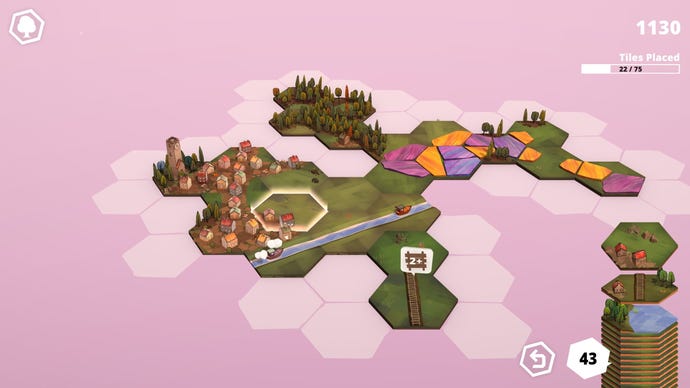
Hard mode plays out very much like Classic mode, but gives you more complex tile combos to deal with. I’ve yet to break the 10,000 mark here.
Creative mode isn’t the only new addition Dorfromantik has seen over recent months. There’s now a Quick mode as well, which tasks you with scoring the highest number of points with a limited number of tiles. Hard mode, meanwhile, has fewer quests, a higher difficulty level and more complex tiles to deal with compared to Classic, and Monthly mode adds a new configuration of custom rules and a fixed biome seed every month where you can compete with others on the online leaderboards. Finally, if you fancy creating your own unique rulesets and sharing them with mates, then Custom mode lets you tailor the game’s settings to your liking, while also allowing other players to play on the same map with the same kind of tiles.
Sure, none of them deviate massively from that central idea of ‘rotate and place for big sweet points’, but having spent the better part of a year trying to perfect just one of its modes so far, I still feel like there are plenty more hours ahead of me as I attempt to master the others. There’s even an expanded soundtrack to enjoy now, too, and the tracks I’ve clocked so far have proven to be just as comforting as the original six. In short, I’m still very much in love with Dorfromantik, and I don’t see that changing any time soon. Its forever status is assured.
