HomeFeatures
Doom At 30: The evolution of Doom through its first levelsWhat the opening level of every mainline Doom game says about its place in FPS history
What the opening level of every mainline Doom game says about its place in FPS history
Image credit:Rock Paper Shotgun/Bethesda Softworks
Image credit:Rock Paper Shotgun/Bethesda Softworks
In revisiting every mainlineDoomgame to celebrate its 30th anniversary this month, it’s clear that even id’s iconic shooter has wrestled with how to answer these question, and the ways it’s tried to reinvent itself over the years paints a captivating portrait of a series trying to move with the times. Nowhere is this more apparent than in its opening levels. Played in close succession, crushing 30 years into not even quite three hours, what emerges isn’t just the evolution of one of the all-time great PC games, but also a potted history of theFPS. So join me as we chart Doom’s rise, fall and rebirth through the lens of its first stages.
Image credit:Rock Paper Shotgun/Bethesda Softworks
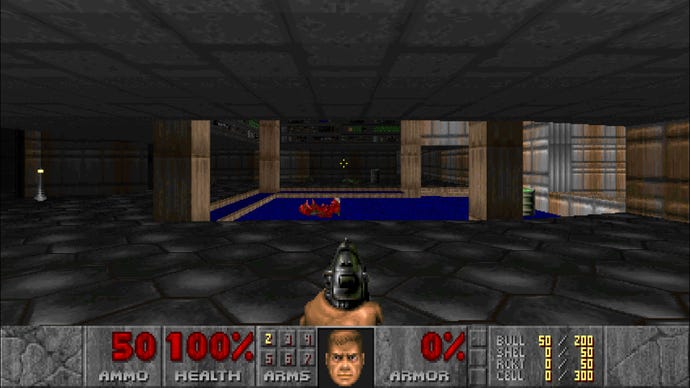
The classic E1M1 Hangar, from within and without (if you know its secrets). |Image credit:Rock Paper Shotgun/Bethesda Softworks
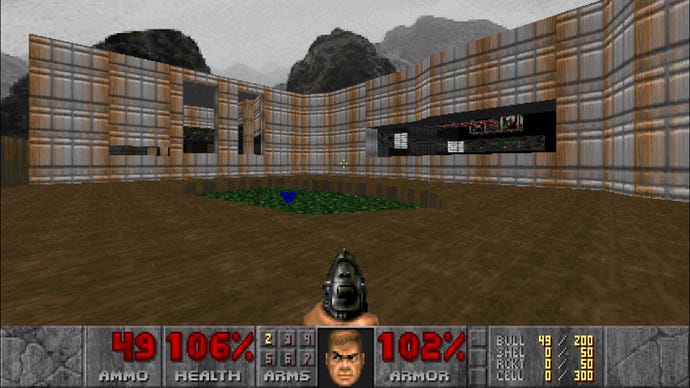
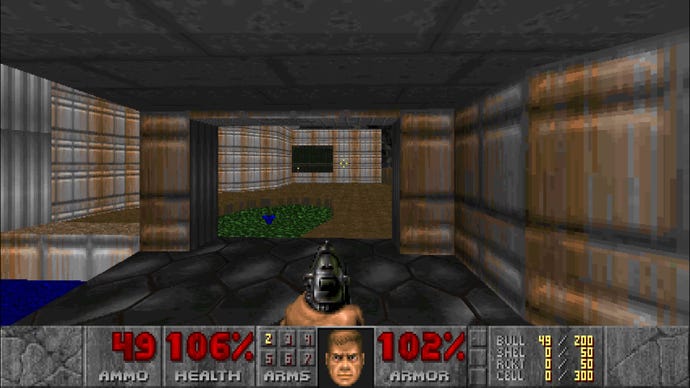
Image credit:Rock Paper Shotgun/Bethesda Softworks
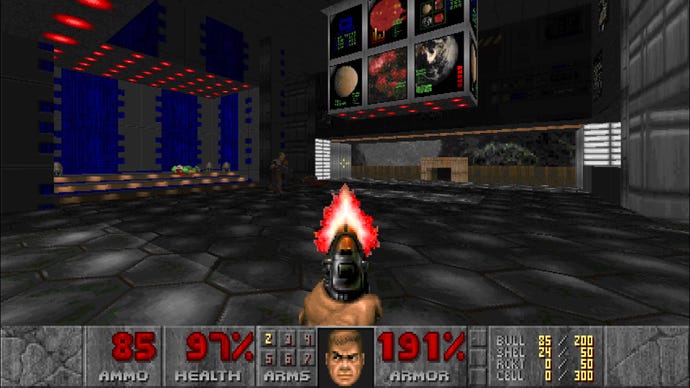
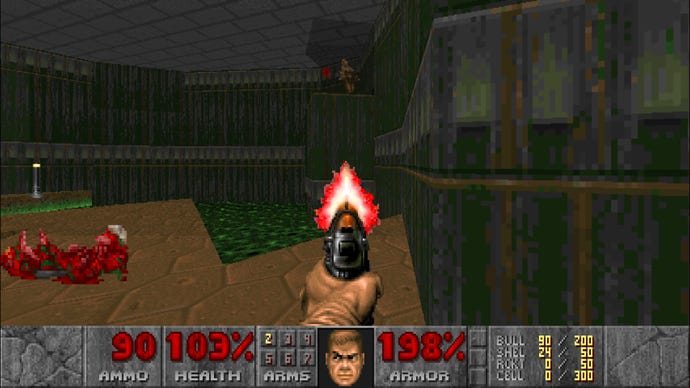
Doom II’s opening level is similarly brief and short-lived, coming with another 30 second par time. As before, the simple S shape of its corridors looks simple at first glance, but this, too, has a lot more going on behind the curtain. For starters, you don’t have to even engage with the two zombiemen standing there in front of you, at ease and unaware. You can turn around and go backwards round the corner to find the humble chainsaw, an essential back-up weapon that doesn’t require any ammo. Indeed, the fact that those zombiemen are oblivious to your presence at first also heralds a vital new lesson - that it’s possible to get the jump on these bozos to get the upperhand.
Image credit:Rock Paper Shotgun/Bethesda Softworks
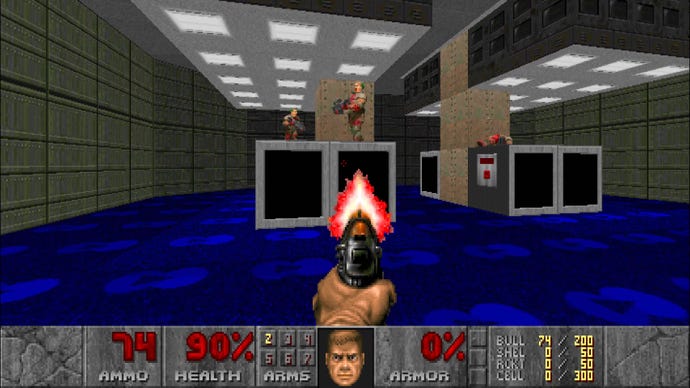
Doom II packs plenty of secrets inside its walls, too, from enemies to full-blown rocket launchers. |Image credit:Rock Paper Shotgun/Bethesda Softworks
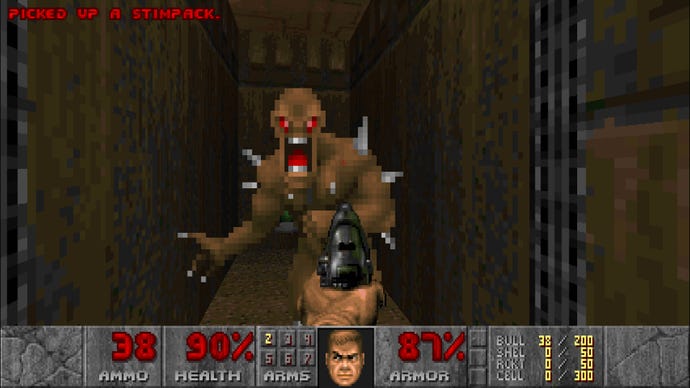
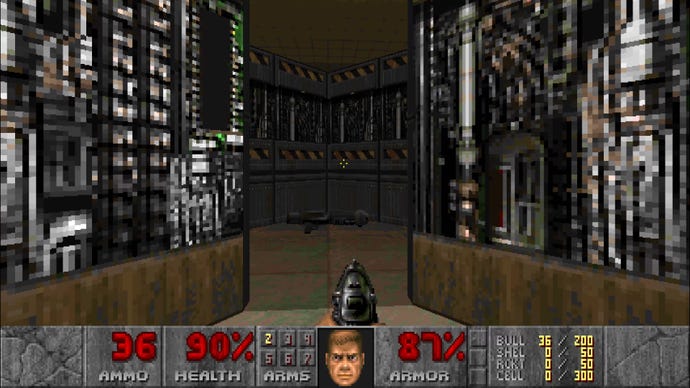
Doom 64 is mostly yellow, beige and Pinky flesh. |Image credit:Rock Paper Shotgun/Bethesda Softworks
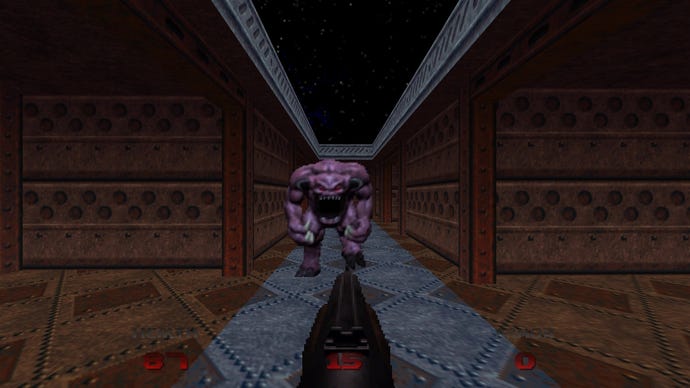
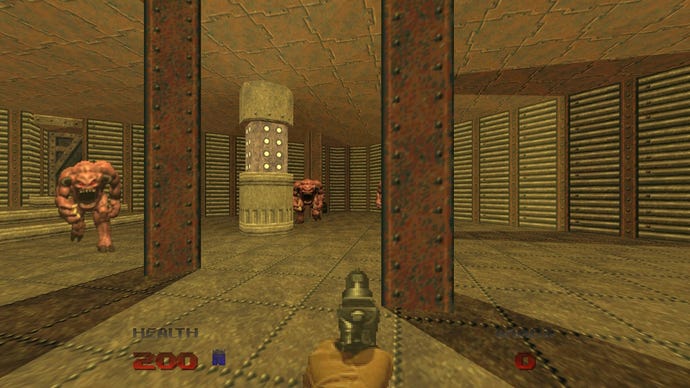
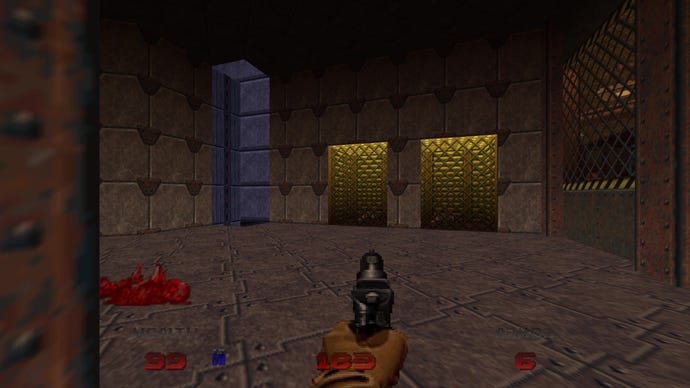
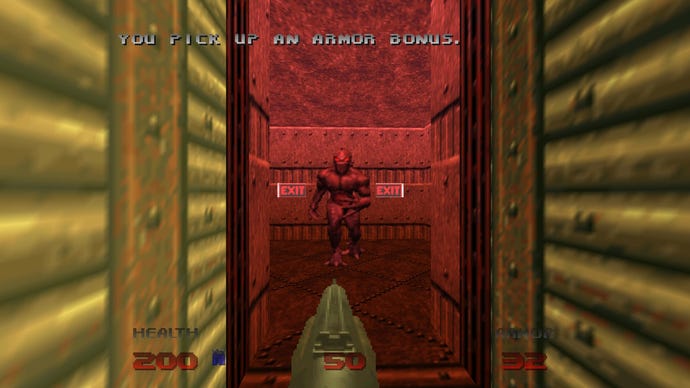
It does a goodBerserkpunch blood splatter, I’ll give it that, but it’s not enough to save what’s otherwise quite a disorienting maze of beige and yellow walls. There’s no clean throughline from start to finish. There are too many rooms, too many dead-ends that loop you back through empty, corpse-strewn corridors, and too many lifts (and crikey, they do love a lift in this game). Its secrets don’t feel like secrets either, as half of them emerge within your direct eyeline, no dashing or thought required. To me, this feels like a game that’s simply pandering to its player base. We know you love the shotgun, we know you love the Pinkys, new custodians Midway cry, so here they are right up front. But it loses all sense of drama and build-up in the process. It’s probably just as well this came out a few months beforeGoldenEye 007did in 1997, otherwise I suspect it would have been absolutely savaged.
It’s quite a stretch before we then get another Doom game - the divisiveDoom 3in 2004 - but man alive, you can really see seven years of FPS evolution come to bear here. During the intervening years, we not only hadHalf-Lifeand Halo come out, but over on consoles we also had Metroid Prime and several Resident Evils, all pushing the boundaries of what people now expect from a story-driven first-person shooter. It’s still a few months yet beforeHalf-Life 2will rewrite the rulebook once again at this point in the year, but one thing is clear:horroris the sub-genre du jour here, as Doom 3 isn’t so much a pure FPS about blasting savage little pixel demons three ways to Friday, as it is a “mature” first-person horror game that also happens to have some shooting in it.
Subtle, Doom 3, very subtle. |Image credit:Rock Paper Shotgun/Bethesda Softworks
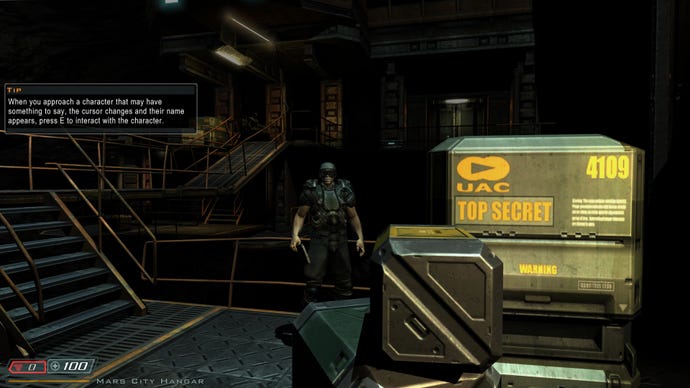
I say “mature”, because looking back at it in the cold hard light of 2023, it’s almost a perfect time capsule of that earnest, self-serious ‘games can be art, too’ mentality that defined so many games of the early 00s, and gosh darn it if they weren’t going to try their darnedest to make sure the general public took them just as seriously as books and films (and it’s probably no surprise to learn that this was the game 2005’s Doom film was mostly based on, too). The bridge between what was “art” and entertainment had never been closer in 2004, but I think Doom 3 ultimately represents a different kind of growing pain - and that’s where does Doom itself fit in this newfangled frontier of FPS games?
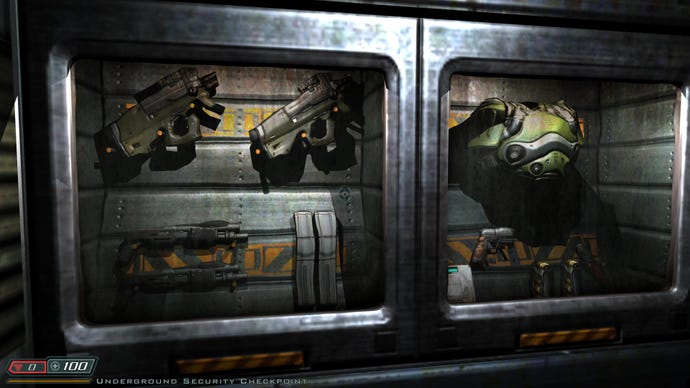
It suddenly seems embarrassed to even hand you a gun before it’s explained its story, its lore, what the UAC are and all the nasty experiments they’ve been conducting somewhere deep inside the facility you’ve just arrived on. From the moment you start a new game file, it takes approximately ten minutes (ten!) before you get your first gun, and another nine (NINE!) before you have anything to actually shoot. That’s almost 20 minutes of story exposition, listening to grumpy NPCs giving you orders to go to this place then that place, managing an ever-dwindling flashlight bulb, and collecting audio logs and PDA diaries that now tell you the secret to opening its locked supply caches instead of just letting you figure it out on your own. “What the heck am I playing?” I wrote in my notes. “Dead Space?”
Sweet relief! |Image credit:Rock Paper Shotgun/Bethesda Softworks
The revamped enemy designs in Doom 3 are legit quite scary, even now. |Image credit:Rock Paper Shotgun/Bethesda Softworks
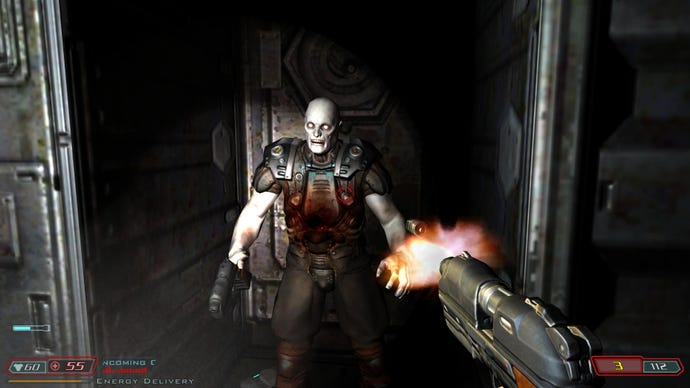
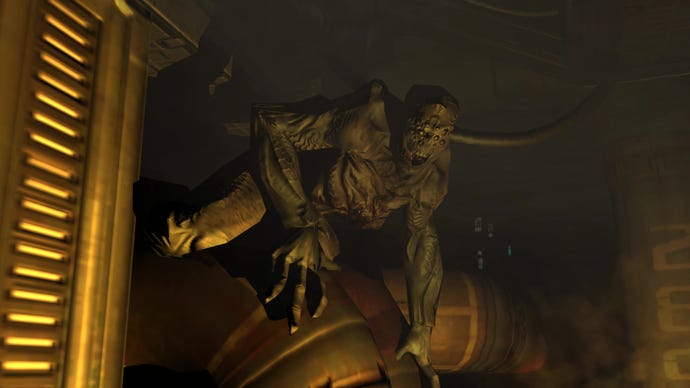
Dead Space, of course, didn’t exist yet. That would come four years later, but holy Cacodemons on a stick Batman, this ain’t the same Doom I’ve just been spit-balling through for the last 15 minutes! This is more like aResident Evilgame prancing around in a Doom skin suit, because when the demons do finally pitch up, there’s barely any room to shoot or move out the way of incoming fire. I’m doing the unthinkable - standing still - to gun down zombiemen and imps because that’s all I can do in these tiny, narrow, linear corridors. This is a serious, grown-up demonic invasion happening in real time now, you dummy. There’s no running off to find ‘secrets’ and cheat your way to bigger and better guns anymore. Your cries of idclip are meaningless here!
Image credit:Rock Paper Shotgun/Bethesda Softworks
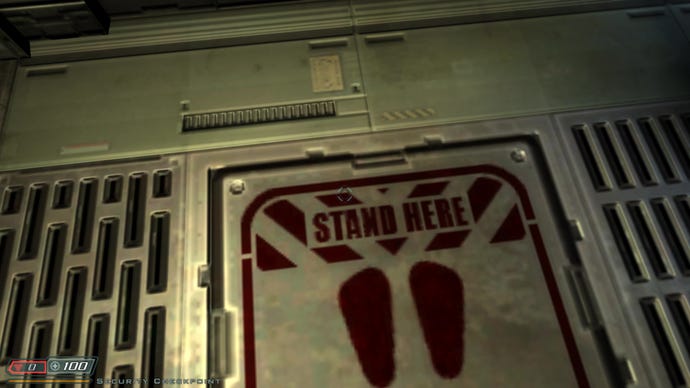
It is, admittedly, quite a good horror game. It’s intense, the radio cries of your rapidly dying comrades is very full-on, the lighting is harsh and brash and it’s not afraid to get right up in your face during that first level to really show you its saliva-slicked teeth. There’s even an imp that does a headcrab-style lunge at you upon opening a door. But I wouldn’t say it’s Doom. There is no time for such childish, frivolous things in 2004, and it takes quite a long old while before someone musters the courage to break out the toy box again and really embrace what makes Doom, well, Doom.
The opening of Doom (2016) has more in common with the look and feel of Doom 3 than you might remember. |Image credit:Rock Paper Shotgun/Bethesda Softworks
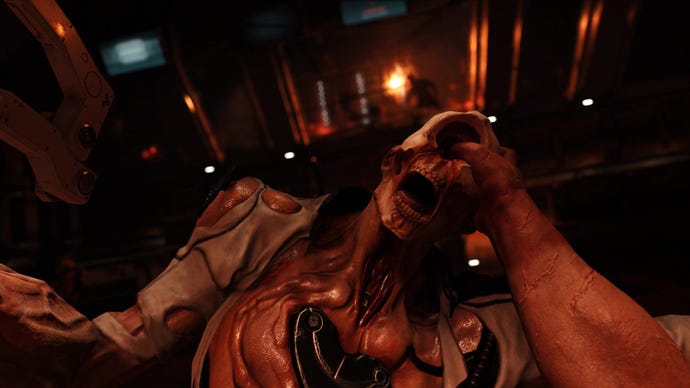
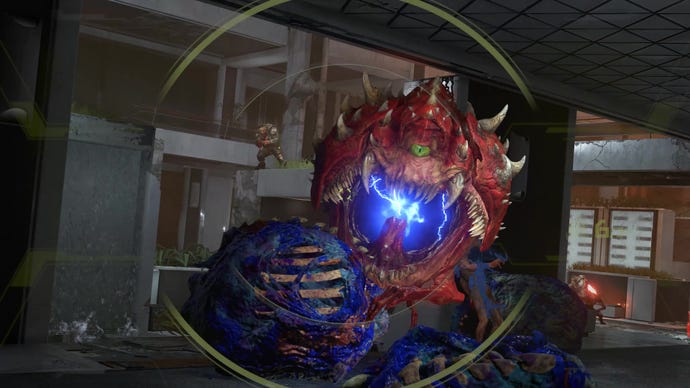
But the thing that Doom (2016) gets right, and now feels completely unashamed about, is giving its players room to breathe again. Battle arenas are rife with platforms and ramps and ledges to vault, and there’s a chaotic energy to every scrap as imps and zombie marines ping-pong off walls and clamber around after you. It feels very much like old Doom again, albeit through the lens of twenty years' worth ofmultiplayerdeathmatches. There’s a light twist of horror in the blood and the gore and the rasping death rattles of your rank and file zombie fodder, but this is a game that revels in the fight of it all.
Space! Glorious space! |Image credit:Rock Paper Shotgun/Bethesda Softworks
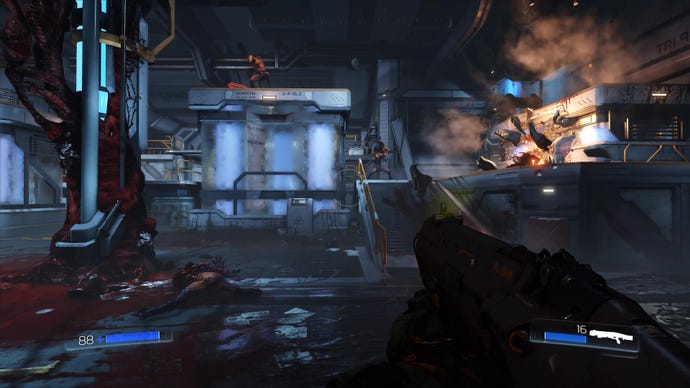
Image credit:Rock Paper Shotgun/Bethesda Softworks
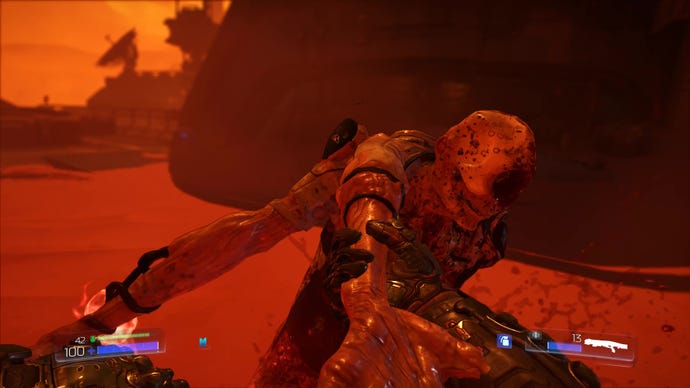
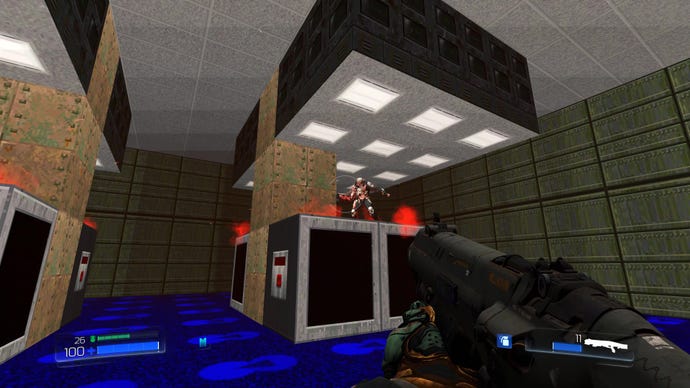
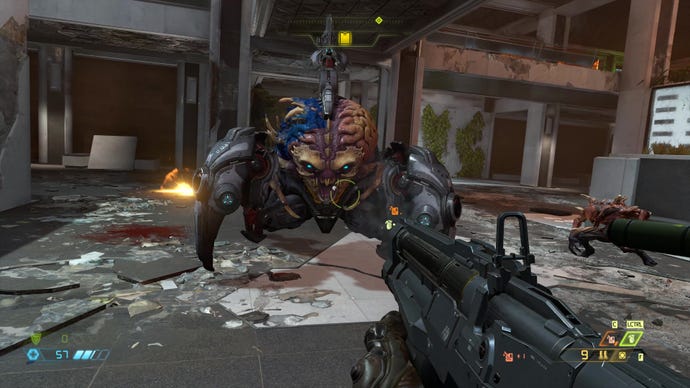
There are still secrets dotted about, with enough time having passed that they’re now mostly retro nods to its source material (see above right) than actual secret rooms and compartments. But the bulk of its exploration is geared around more mundane things like weapon mod upgrades, map stations, and finding the bodies of elite guards with Praetor token USB keys on them you can use to upgrade your suit - things that old Doom had no need for. But in this age of genre pilfering, where everything is sort of anRPGnow whether it likes it or not, Doom joins the fray with gusto. The crucial difference between this and Doom 3, however, is that it doesn’t lose its own identity in the process.
My face would probably look like that, too, if I’d just been chainsawed in half in the space of two seconds… |Image credit:Rock Paper Shotgun/Bethesda Softworks
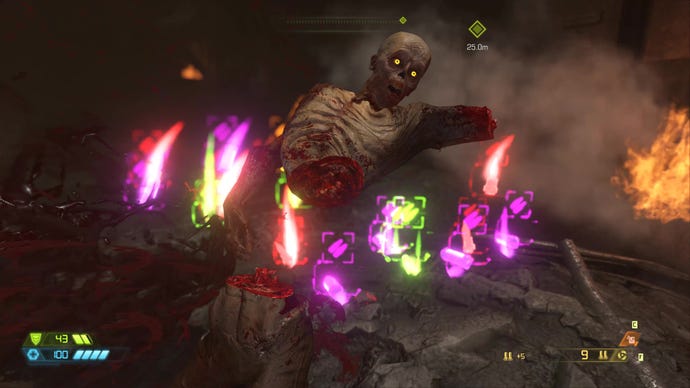
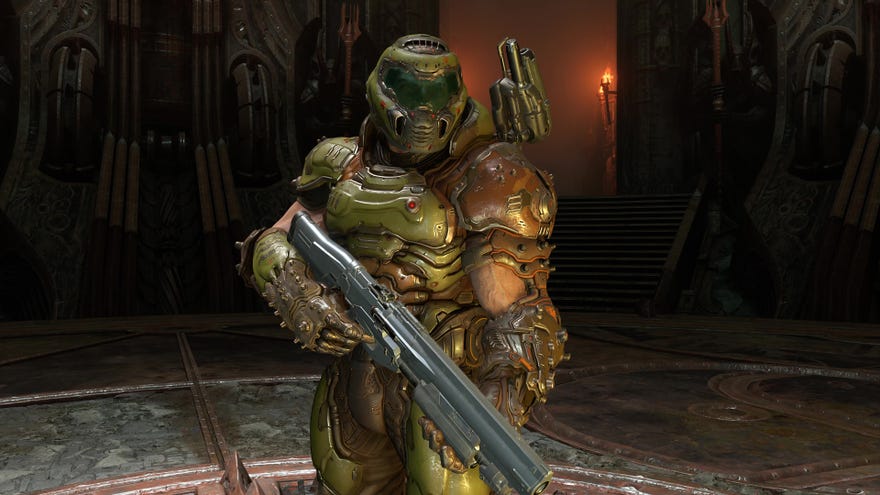
Doom Eternal has finally learned the art of modern day sequelcraft - building on what came before without forcing a contrived reset of your abilities, while also upping the stakes to thrilling and satisfying effect. It still bears some less welcome hallmarks of contemporary game design - your AI companion Vega will merrily chat to you in voiceover while marking up objective locations on your HUD, for example - but these sanded, blood-slicked edges do also create a wonderful kind of contrast when they butt up against some of its more overt game-yness. Whereas secret levers and switches were just ordinary parts of the scenery in Doom (2016), here you’ll spy big glowing 1UP heads through cracked walls, spinning yellow question marks behind metal grates, and other faintly meta visual cues that - to my mind, at least - hark back to the rule-breaking winks of its 90s forebears. This place isn’t meant to make any kind of serious sense, it seems to suggest, so why not just have fun with what we’ve prepared for you instead?
It’s the same kind of confidence that Doom (1993) and Doom II had in spades all those decades ago with their snake-like secret passageways, deliberate blackouts when you so much as sneezed on a key and doors that only opened when glanced right with a southeasterly wind behind you, and it’s heartening to see the current id Software team manage to rekindle that same playfulness 30 years later. It might be cliched to say that Doom has been to hell and back during the intervening decades, but it’s clear right from that very first level of Doom Eternal that this is a series that’s finally found its feet again. It’s successfully spun a new beginning for itself, and I can’t wait to see where it takes us next over the next 30 years.
Image credit:Rock Paper Shotgun/Bethesda Softworks