HomeReviewsBlasphemous 2
Blasphemous 2 review: a worthy 2D Dark Souls tribute drenched in literal CatholicismOh Pointy-hatted one
Oh Pointy-hatted one
Image credit:Rock Paper Shotgun/Team17
Image credit:Rock Paper Shotgun/Team17
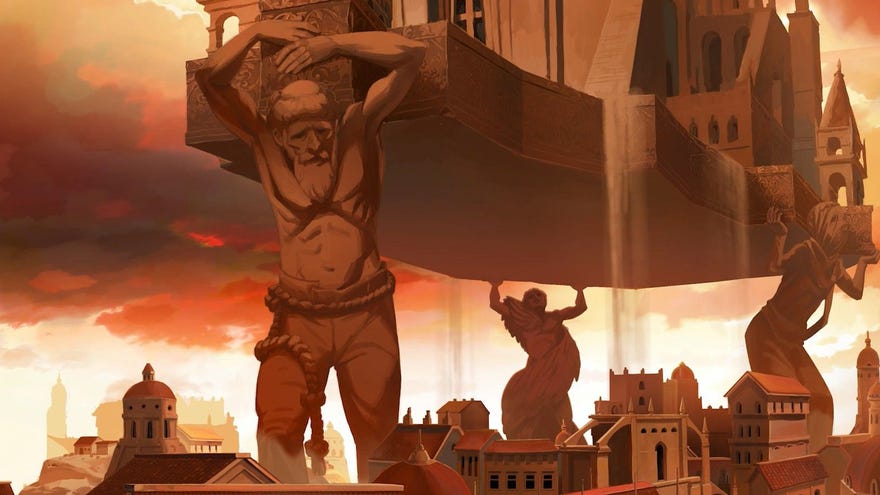
Hear me now, Penitent Ones, for thou are subject to an intro that borrows its style from thine video game. With divine expedience you must go forth into a world from which all unworthy creatures impart their knowledge with great excitations, entangling their speech with a verbosity comparable only to how the holy miracle does imbue our city with its fearsome illumination. If you think this a questionable affectation then guard thyselves, oh Penitent Ones, for you really are in store for an awful lot of this.
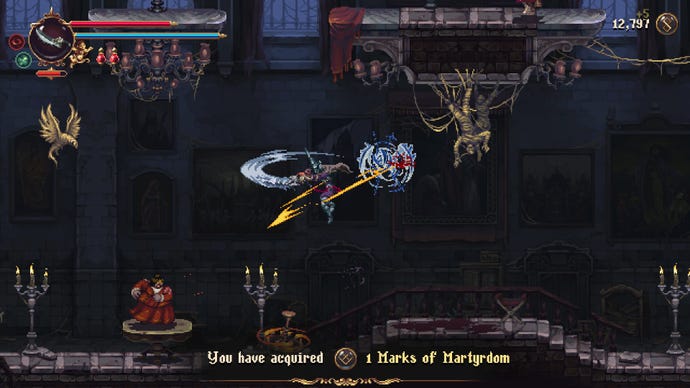
Beyond that,Blasphemous 2is a crackingMetroidvaniarooted in satisfying combat and rewarding exploration of the ‘ooh, I didn’t realise this bit was connected to that bit’ vein. Neither element is on the same level ofDark Souls, but then what is?
From the perspective of someone who didn’t playBlasphemous1, this is all baffling but welcome. It swaps Dark Souls’ minimalist approach to dialogue for flowery theology waffle, but preserves that same essense of cryptic storytelling you can either attempt to decipher or just enjoy for its surface weirdness. There’s the same central loop of forging ahead to the next bonfire fountain or shortcut, too, only here we’re explicitly dealing with warped Catholicism, to the point where there is a priest who you have to repeatedly pay to take away your guilt if you want enough mana to cast magic spells. Just like real church.
To see this content please enable targeting cookies.Manage cookie settings
To see this content please enable targeting cookies.Manage cookie settings
That means your starting weapon determines where you can go while you find your footing, and it takes a few hours before you have a full arsenal and can forge ahead into areas that are outright harder. It’s a clever way to weave Metroidvania progress gates into an evolving combat system, and provides a spot of welcome variety for anyone who replays the whole game or accidentally deletes a save file they’ve already ploughed 4 hours into. Woe is me.
Image credit:Rock Paper Shotgun/Team17
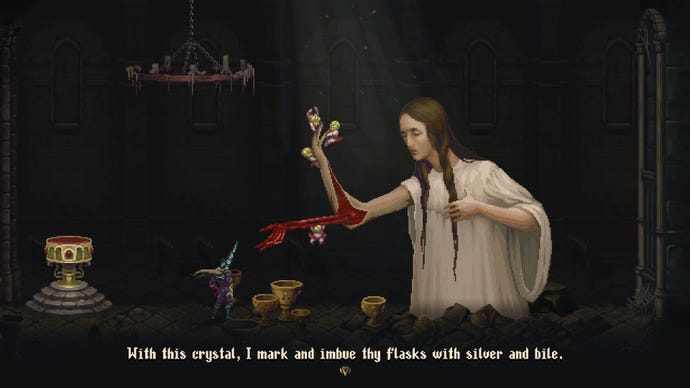
It’s a world worth seeing, though I do have more muddied thoughts about the way it obfuscates important information, and outright gripes about some systems that did not have to be such a pain. Take something as fundamental as your health, for instance: if you want to embiggen it from its measly starting size, or increase the amount or power of your healing flasks, then it’s up to you to seek out the right character. I missed them until I was about 5 hours in, which to some extent is on me for not thoroughly investigating near the starting area, but nevertheless resulted in pointier difficulty spikes than might have been intended.
Image credit:Rock Paper Shotgun/Team17
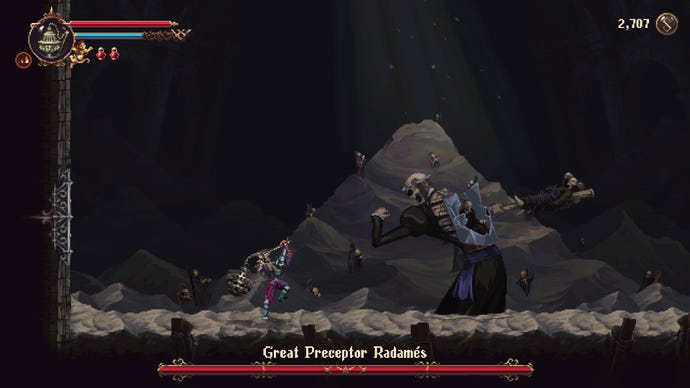
I’m aware this is a whole design philosophy, where semi-hiding quasi-vital systems will feel rewarding enough for most but frustrating for those who slip through the cracks. But major quality of life improvements belong where they can’t be missed, says I. I’m the sort of person who dearly wished I was playing post-release with a guide on hand to look up anything that might fit that category, but even so I might have missed certain key finds - most notably, the easily-overlooked prayer that lets you teleport back to town whenever you like, and potentially saves you hours of backtracking.
