HomeFeaturesAtomic Heart
Atomic Heart may be a beautiful FPS, but I wish it had a silent protagonistHe’s very good at killing the vibe
He’s very good at killing the vibe
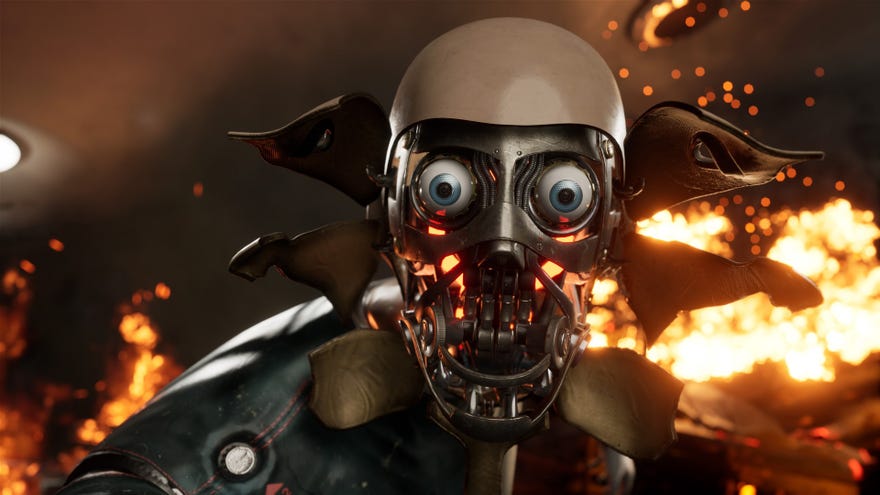
I’ve played around four hours of soviet-punk FPSAtomic Heart, which took me from the story’s opening moments to plenty of the game’s earliest bits. The final hour or so was split into two parts, thanks to a lovely dev who time-skipped me forwards and into the game’s open world, before warping me through a gate and into an early boss’s lair. There was alotto take in, from robo-gloves, to sex-dom vending machines, to grannies with bazookas.
I went in with expectations that it might be a little likeBioShock, all steely and serious in its delivery of some vaguely philosophical truth. But I emerged with a totally different impression. Far from polished seriousness, Atomic Heart seems a little disjointed in its ambition, with a main character who almost immediately kills any atmosphere when he opens his mouth.
Atomic Heart | Exclusive 4K GeForce RTX Gameplay RevealWatch on YouTube
Atomic Heart | Exclusive 4K GeForce RTX Gameplay Reveal

Developers Mundfish certainly spent some time polishing up the visuals, because Atomic Heart looks phenomenal. Confetti rains over vast crowds, a quaint river glistens, and there’s one grand marble floor that’s so spectacularly ray-traced, I’m convinced I saw our hardware editor James smiling back at me in its reflection.
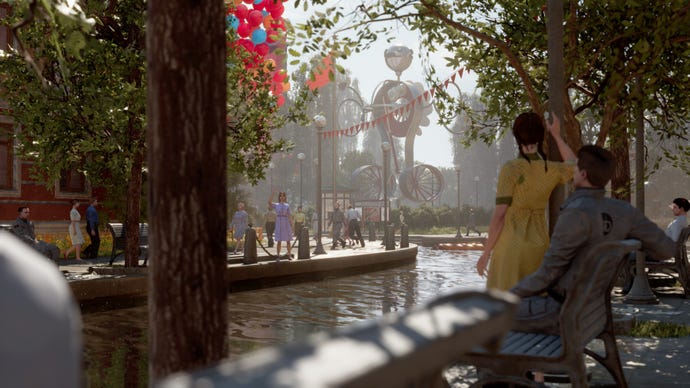
The early portions of the facility are wonderfully realised, as you tour the dishevelled offices of former workers or enter research zones home to a mechanical worm that’s carved a network of tunnels through them. While perhaps not quite as atmospheric as say, Half Life, each level certainly compels you to push onwards and uncover its secrets.
As I pushed on, though, it struck me that much of what I’d experienced so far felt oddly abrupt or half-formed, particularly when it came to sudden encounters. I met a hilarious granny who armed herself with a bazooka and blasted some malicious mechs from the sky. Then without so much as a natter, we parted ways. Maybe you’ll reunite later? I met a doctor tending to some wounded, so I helped her out… and then, once again, we parted ways. Maybe you’ll see her later too? When there’s an opportunity to give the player some information, or just a chat with a friendly face, why not take it?
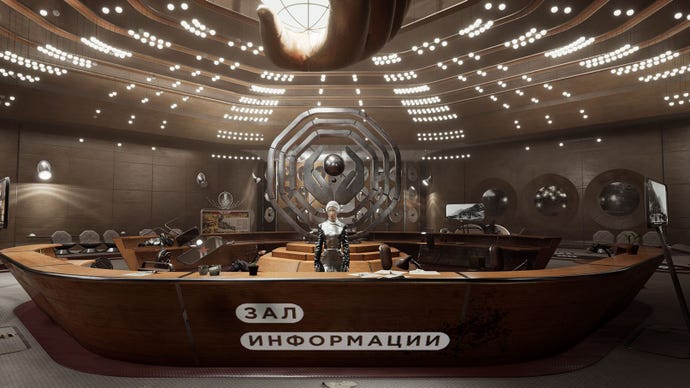
Take stealth, which encourages you to pick up objects with your glove and chuck them to distract enemy security cameras. This sounds like standard stealth sim stuff, but the thing is that, in practise, the enemies aresosensitive to your movements that they’ll immediately twig you from all manner of angles anyway. Look, I’m not asking for Arkane’s architectural brilliance here, but rooms and corridors in Atomic Heart, while pretty, just aren’t built for the sort of stealth that seems required to survive.
It’s a shame, then, that only at rare moments do the game’s environmental puzzles align with your character’s abilities in clever ways. Like one time, where there’s this translucent polymer tunnel you’re able to swim upwards through (because science) - except that it’s just out of reach. However, there are forklift bots whizzing about who, it turns out, aren’t just a hazard, but are stunnable objects that act as ramps so long as you can stop them with a zap of your glove. Ah yes! The glove! It’s something I forgot about regularly, because the game doesn’t necessarily push it as anything other than a loot-hoover early on.
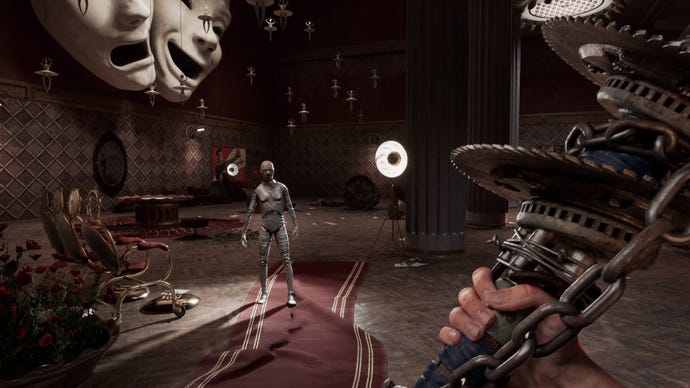
As you explore, you’re encouraged to use your glove to telekinetically vacuum batteries and conductors from drawers into your backpack. You can then spend these bits at upgrade stations in safe rooms - except that the upgrade stations are these sex-crazed vending machines that spout filth as you attempt to pour 24 atoms into upgrading your axe’s damage, or crafting a new laser pistol. Not only is it uncomfortable, it’s even more baffling that these vending machines become non-nympho later, for no particular reason. I mean, it’s great that they chill out on the shagging, but also a strange thing to commit to and then drop so suddenly with zero explanation.
When games get upgrades right, they give resources weight and rarely overload you with options. One or two may unlock at a time, and not only is the path to earning them clear, but the path after you’ve acquired them is too. If you, e.g., breathe a swarm of flies into existence, you should know if you can use it to turn bins that block your way into a pile of murky juice. In Atomic Heart, I rarely knew what materials I’d collected, held, or what to spend them on. The same goes for the skill tree, which is rammed with abilities from the get-go, but with no tooltips, or hints from the facility you’re trapped in that give you a sense of what would be a smart investment.
In a similar vein toElden Ring, everything out in the open world wanted to rip me to shreds. Security cameras were dottedeverywhereand they’d alert bots to my location regularly, making traversal a tricky affair if I wanted to get anywhere quickly. Again, I don’t know if this will become a pain or a fun challenge, as the game’s open world remains an enigma.
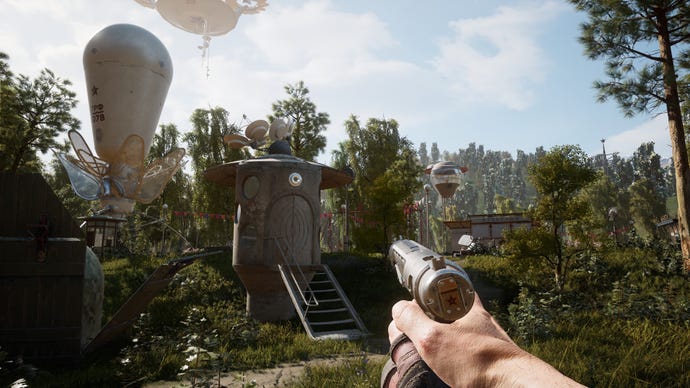
Once I was warped to the open world, I got the sense that the glove may become a more important tool in your arsenal later into the game. I had the ability to freeze enemies with a snowy beam, or send out the gooey polymer gunge and then charge it with electricity to create a makeshift trap. The devs also kitted me out with loads of neat weaponry, including a massive tesla cannon that fired energy bubbles or one enormous orb that would fry enemies that got too close to its static tendrils.
For my last hurrah, I fought a rotund android that shot missiles at me and curled up into an enormous metallic marble to send shockwaves rippling across the arena. I liked how it encouraged movement, to dodge or jump out the way of its rolls and stomps. Except the fight wasn’t as smooth or measured as I’d expected, with a jittery layer to the whole affair. Instead of feeling frenetic, it felt a bit messy.
Atomic Heart’s trailers have played their part well, making the game seem like a tremendously polished, astonishingly beautiful trip through a nightmarish soviet-punk facility. And at times in the preview I felt it hit its ambitions, and genuinely pull me into a crumbling technological idyll. Yet, a lot of the game’s earliest encounters - with its NPCs, its exploration and even its upgrades - are clumsily handled, which may only grow more problematic as the game’s scope seemingly increases.
